Reducing Allergens in New England Buildings
Mass Janitorial
Concord, MA · in business since 2010
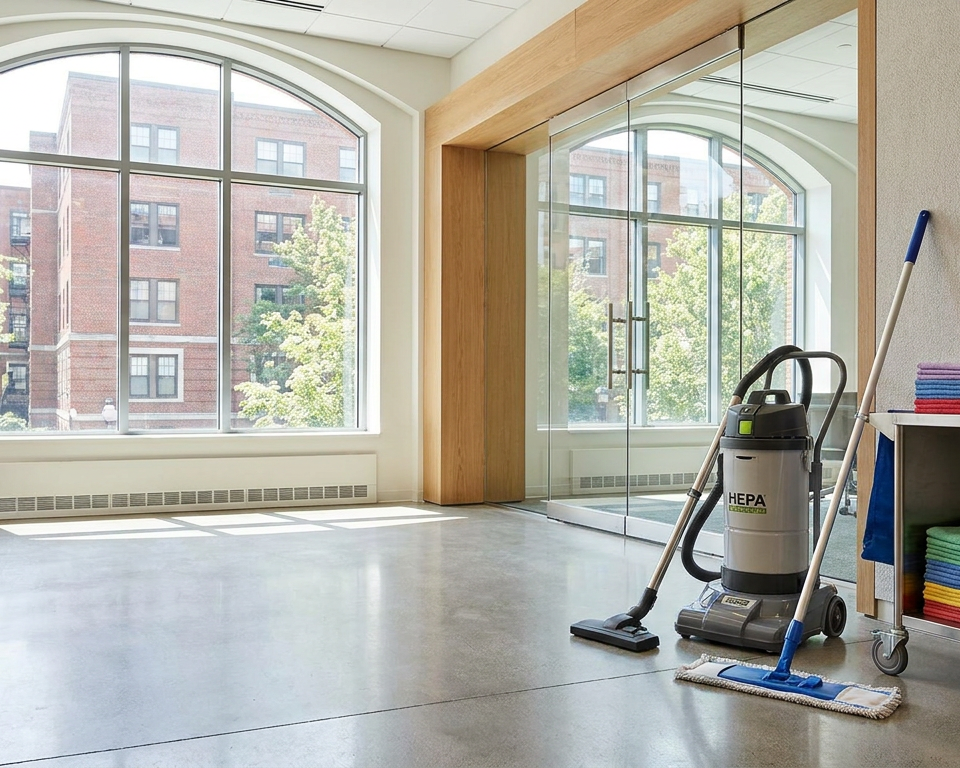
On a damp spring morning in Concord, you unlock the office, flick on the lights, and before the coffee is even finished brewing someone is sneezing in the front hall. By nine o’clock, the tissue box at reception is half empty, the conference room feels stuffy, and somebody has already said the building seems dusty again even though it was cleaned a day or two ago. Around here, that pattern is familiar. New England gives us a little of everything — tree pollen in the spring, humidity in the summer, tracked-in leaves and mold spores in the fall, then sealed-up dry indoor air all winter — and commercial buildings feel every bit of it.
That is why allergen reduction in an office or shared commercial space is never about one heroic deep clean or one special product. It comes down to how the building is used day after day, what gets carried in from outside, and whether the cleaning routine is actually helping or just moving dust around. We talk about this with office managers and property managers all the time in Concord, Acton, Bedford, Lexington, Lincoln, Maynard, Sudbury, Weston, and nearby Middlesex County towns. Most people are not looking for perfection; they just want a space that feels clean, smells clean, and does not leave staff rubbing their eyes by lunchtime. That is a reasonable goal, but it takes a practical plan.
The first place we look is entry traffic, because a lot of what bothers people indoors starts outside. Pollen, road dust, grass clippings, and fine dirt do not magically appear in the carpet tiles near the front desk. They come in on shoes, carts, deliveries, and anything else crossing the threshold all day long. If the entrance is not set up to catch that material early, it gets ground into flooring, kicked up into the air, and spread into offices and common areas. Good matting, regular vacuuming of entry zones, and consistent attention to edges and corners make a bigger difference than most people expect.
Once that material gets inside, the next issue is how it is being removed. A lot of buildings look tidy on the surface but still hold dust in fabric panels, carpet, vents, ledges, and under furniture where rushed cleaning tends to miss. We have found that allergen control is often less about doing something flashy and more about doing ordinary things thoroughly and on schedule. That means dusting in a way that captures particles instead of scattering them, vacuuming with equipment that is maintained properly, and paying attention to touchpoints and horizontal surfaces that collect buildup over time. If the cleaning crew is only hitting what is obvious, staff will keep feeling the effects even when the room looks presentable.
That also leads to one of the more common mistakes in commercial cleaning: using too much product or the wrong product for the surface and the season. Strong fragrance can bother sensitive employees just as much as dust can, and over-wet cleaning can create its own problems in a humid New England summer. We prefer a measured approach with products that are effective, used correctly, and appropriate for the setting, whether we are cleaning a general office, a retail store, or a medical office that needs more structured protocols. In spaces where disinfection matters, our crews follow HIPAA-aligned processes where appropriate and use practical standards, including EPA List N disinfectants when the situation calls for them. But for day-to-day allergen reduction, the goal is not to soak every surface in chemicals; it is to remove the material that is causing irritation in the first place.
Humidity plays a bigger role than many owners realize, especially in older buildings around Concord and the surrounding towns. When a building gets muggy, dust clings differently, odors settle in, and damp areas around break rooms, restrooms, windows, or lower-level spaces can start supporting mold growth before anyone notices a visible problem. On the other hand, when the heat runs nonstop in winter and indoor air gets very dry, particles stay airborne longer and people feel it in their throat and eyes. Cleaning alone cannot fix an HVAC issue, but a good cleaning plan should take the building’s seasonal patterns into account. If we know a certain suite gets condensation around windows in October or a back office turns stale every February, we clean with that reality in mind instead of pretending every month is the same.
Where cleaning routines really help
This is where consistency matters more than intensity. In most commercial buildings with 10 to 30 employees, the most effective allergen reduction strategy is a recurring schedule that keeps dust, debris, and moisture-prone areas from getting ahead of you. We work evenings, typically between 5 PM and 10 PM, which lets us get into offices, lobbies, restrooms, and break rooms after the day winds down and before buildup becomes tomorrow morning’s complaint. Because we work month to month and by the job rather than by the hour, the conversation stays focused on what the building actually needs instead of whether someone spent eleven more minutes in one room. That tends to produce better cleaning and fewer surprises.
There is also value in knowing which surfaces deserve extra attention during allergy season. Upholstered guest chairs in waiting areas, conference room blinds, windowsills, baseboards, copy rooms, and break room floors all collect fine debris that people notice only after it has built up. Restrooms matter too, not because they create seasonal allergies, but because poor restroom cleaning adds to the general sense that the whole building is not being cared for. When people feel the air is off, they rarely separate one problem neatly from another. A clean, orderly environment supports the bigger goal, which is making the building feel comfortable to work in.
For some properties, especially mixed-use buildings and medical offices, communication matters just as much as the checklist. If a tenant mentions increased dust in one suite, or a practice manager notices irritation in a waiting room, that detail should change the cleaning approach right away. We would rather hear that a specific corner of the building is bothering people than get a vague complaint three weeks later that the place just does not feel clean. Our crews are OSHA-trained, and we try to keep things straightforward: note the trouble spot, adjust the routine, and follow through. Fancy language does not clean a building; paying attention does.
There is one more piece that often gets overlooked, and that is clutter. Even an excellent cleaning routine has limits if floors are crowded, storage areas are overflowing, and every flat surface has become a holding zone for boxes, paper, cords, and personal items. Dust settles where people give it a place to settle. If you want fewer allergens in the air, you need clear access to the places where those allergens collect. We are not in the business of telling clients how to run their offices, but we do see over and over that buildings with manageable clutter are easier to clean well and easier for staff to feel comfortable in.
In the end, allergen reduction is not mysterious. It is a matter of controlling what comes in, removing it thoroughly, paying attention to moisture, and sticking with a cleaning routine that matches the building and the season. Around here, where one month brings pollen and the next brings slush and salt, that kind of steady approach beats occasional overcorrection every time. If you are walking into your office on Monday mornings in Concord or the surrounding area and thinking the space still feels dusty, stale, or harder on people than it should, we are always happy to do a free walkthrough and talk through what we are seeing. Sometimes a few practical changes are enough to make that first breath through the front door feel a whole lot better.
Sources & References
More in this category
- Office Floor Care: VCT, Wood, or Stone?
VCT, hardwood, and stone floors do not respond to the same cleaning routine. This guide walks Concord-area business owners through what each surface needs, what commonly goes wrong, and how a practical maintenance plan helps floors last longer and look better.
- Indoor Air Quality and Employee Wellness
Indoor air quality problems often show up as stale rooms, dust, and lingering odors long before anyone names them. This post explains, in plain terms, how recurring professional cleaning supports employee wellness in Concord-area offices and shared workspaces.
- Green Cleaning for Offices in 2026
Green cleaning in 2026 is less about marketing claims and more about using the right EPA-registered products in the right places. Here’s how Concord-area offices can balance lower-odor daily cleaning with proper disinfection that holds up in the real world.
Want this handled at your facility?
Start with a free walkthrough. Same business day reply. No obligation.