Office Floor Care: VCT, Wood, or Stone?
Mass Janitorial
Concord, MA · in business since 2010
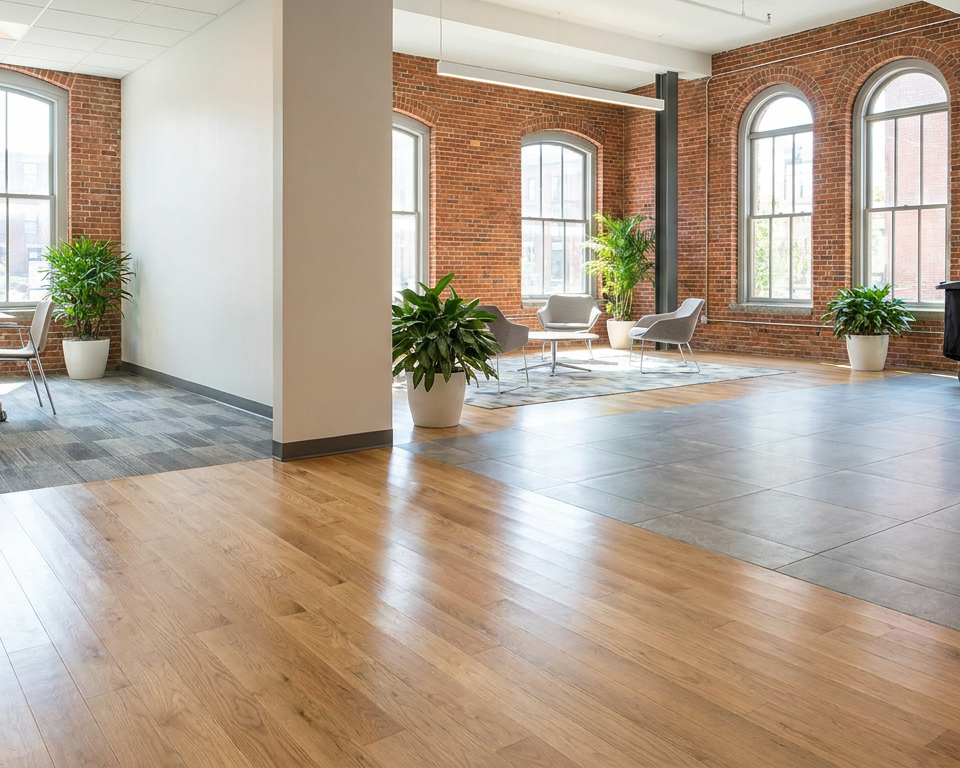
On a wet Monday morning in Concord, the floor usually tells the truth before anything else does. You unlock the front door, step in out of the slush, and there it is right away: the dull path from the entrance to the front desk, the cloudy marks under the waiting room chairs, the sticky patch near the break room nobody noticed on Friday afternoon. Most business owners do not spend much time thinking about flooring until it starts making the whole place feel a little tired, even when the rest of the office is in good shape. That is usually when we get the call. The question sounds simple enough — how do we take care of these floors properly — but the answer depends entirely on what you are standing on.
That is where a lot of offices in the Concord, Acton, Bedford, Lexington, Lincoln, Maynard, Sudbury, and Weston, MA area get tripped up. People hear the word floor care and assume there is one right routine for everything, as if vinyl tile, hardwood, and stone all want the same treatment. They do not. A floor can look similar at a glance and still need a very different approach to stay clean, hold its finish, and avoid unnecessary wear. When we walk a building with an office manager or property manager, we usually spend a good chunk of time just identifying surfaces and talking through traffic patterns, because the front entry, private offices, restrooms, and break room all put different stress on the same material. That part matters more than most people realize.
Let’s start with VCT, because it is still one of the most common office floors we see in commercial spaces around Middlesex County. VCT is practical, cost-effective, and built for foot traffic, but it only stays that way if the finish is maintained on purpose. Daily or recurring cleaning has to remove grit and moisture before they start grinding down the top layer, especially near entrances during a Massachusetts winter. Once that finish gets worn thin, the floor stops reflecting light evenly, starts looking permanently dirty, and becomes harder to bring back with routine cleaning alone. At that point, the conversation often shifts from simple upkeep to scrubbing, recoating, or a more complete restoration cycle.
What surprises people about VCT is that the tile itself is not usually the problem. The finish is doing the hard work, and when that protective layer is neglected, the floor pays for it. That is why a good recurring program matters more than heroic deep cleaning once or twice a year. Our crews work evenings and overnight, generally between 5 PM and 10 PM, so we can keep that routine steady without interrupting your staff or your patients. We price by the job, not by the hour, because a proper floor care plan should match the building and the traffic it sees, not drag on until a clock says to stop.
Hardwood is a different story, and it is often where good intentions cause the most trouble. In an office, hardwood usually shows up in older buildings, executive spaces, meeting rooms, and sometimes houses of worship that have been adapted for office use during the week. It looks warm and professional, but wood does not forgive excess water, harsh chemicals, or abrasive pads. If VCT needs protection through maintained finish, hardwood needs restraint. Too much moisture can seep into seams, dull the surface, and over time lead to cupping, staining, or a finish that starts breaking down before it should.
Because of that, hardwood maintenance is less about making it shine on command and more about preserving the condition it is already in. Dry soil removal matters a lot, because fine grit acts like sandpaper under shoes and chair legs. Spot cleaning has to be controlled and product choices need to be compatible with the floor’s existing finish, whether that is polyurethane or another commercial coating. We are careful here, because there is no prize for making a wood floor look glossy for two days if the method shortens its life over the next two years. For a busy office manager, that is the difference between cleaning and wear management.
Stone floors can be the most durable-looking surface in the building, which is exactly why they get misunderstood. A lobby with stone tile or polished stone feels solid and low-maintenance, and in one sense it is, but stone still has its own limits. Some surfaces are porous, some react badly to acidic cleaners, and many show etching, residue, or haze when the wrong product gets used over and over. If hardwood teaches restraint, stone teaches chemistry. The wrong cleaner may not cause instant damage, but it can slowly take the life out of the floor until it looks flat no matter how often it is mopped.
That is why we always look at more than the material name when we build a cleaning plan. We want to know where salt and sand are entering the building, whether the front mats are doing their job, how often chairs are moving across the surface, and whether a break room or restroom sits just around the corner. The same stone floor can perform very differently in a quiet hallway than it does in a heavily used lobby. The same goes for VCT outside a medical office exam area versus VCT in a back administrative corridor. We clean medical offices too, using HIPAA-aligned protocols, so we are used to adjusting methods to the setting instead of forcing one routine across the whole building.
What a sensible office floor plan looks like
In practice, most offices do best with a simple plan built around prevention first, routine care second, and restoration only when needed. That usually means entry matting that actually captures water and grit, consistent dust and damp mopping with the right products for the surface, fast attention to spills, and periodic deeper service before wear becomes damage. VCT may need scrubbing and recoating on a schedule tied to traffic. Hardwood may need gentler recurring care and protection from moisture around entrances and kitchenette areas. Stone may need neutral cleaners and closer attention to residue, especially in lobbies where appearance does a lot of the talking for your business.
The good news is that most flooring problems we see are not dramatic failures. They are slow mismatches between the floor and the maintenance routine. A cleaner uses too much water on wood because that is what works on another surface down the hall. A VCT floor gets mopped faithfully but never reprotected, so it gradually loses the layer designed to take abuse. A stone entry gets cleaned often but with the wrong chemistry, and six months later nobody can figure out why it always looks tired. None of that is unusual, and most of it is fixable if you catch it early.
That is also why month-to-month service works well for a lot of local businesses. A 10-to-30-person office in the Bedford or Lexington, MA area does not need a bloated contract and a one-size-fits-all program. It needs a crew that notices when winter sand is chewing up the front path, when the break room floor needs more attention than the conference room, and when a finish is wearing down before it turns into a bigger expense. We have been doing that since 2010, and the value is often in those small adjustments made steadily over time. Floors last longer when somebody is paying attention before they start complaining.
So if you are looking at your office floors and feeling like they never quite look as clean as the rest of the space, it is probably not your imagination. The material underfoot may need a different approach than the one it has been getting, and once you understand whether you are dealing with VCT, hardwood, or stone, the next steps usually become a lot clearer. We are happy to walk the space with you, talk through what the floors are actually made of, and give you a practical plan that fits how your building is used. It is the same conversation we have all the time after a wet Monday morning, when the floor tells the truth before anything else does.
More in this category
- Indoor Air Quality and Employee Wellness
Indoor air quality problems often show up as stale rooms, dust, and lingering odors long before anyone names them. This post explains, in plain terms, how recurring professional cleaning supports employee wellness in Concord-area offices and shared workspaces.
- Green Cleaning for Offices in 2026
Green cleaning in 2026 is less about marketing claims and more about using the right EPA-registered products in the right places. Here’s how Concord-area offices can balance lower-odor daily cleaning with proper disinfection that holds up in the real world.
- Reducing Allergens in New England Buildings
Allergen reduction in a New England commercial building is less about one deep clean and more about steady habits that match the season. This post walks through the practical steps that help offices and shared spaces in the Concord, MA area feel cleaner and more comfortable day after day.
Want this handled at your facility?
Start with a free walkthrough. Same business day reply. No obligation.