Green Cleaning for Offices in 2026
Mass Janitorial
Concord, MA · in business since 2010
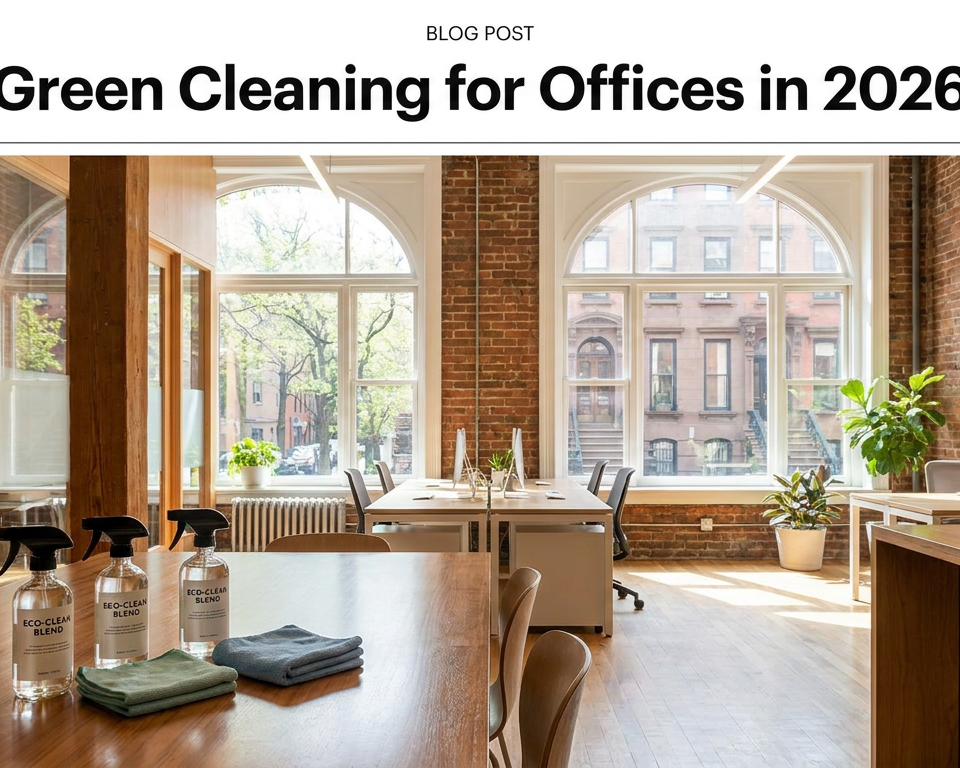
On a Monday morning in Concord, the first thing most people notice when they unlock the office is not the floors. It is the air. If the break room still carries Friday afternoon’s coffee and lunch smells, if the front entry glass has fingerprints at eye level, or if somebody quietly reaches for hand sanitizer before they touch the copier, the whole place feels a little less cared for than it should. That is usually when an owner or office manager starts asking what “green cleaning” really means now, and whether safer products and proper disinfection can actually live in the same building without turning into a science project.
It is a fair question, especially going into 2026, because the conversation has changed. A few years ago, green cleaning was often treated like a marketing label, something people put on a proposal next to a leaf icon and hoped nobody asked too many questions about. Now business owners in places like Concord, Acton, Bedford, and Lexington are a lot more practical about it. They want products that are easier on indoor air, surfaces, and the people working around them, but they also want to know the restrooms are properly disinfected, the touchpoints are handled the right way, and nobody is cutting corners in the name of being environmentally responsible. We think that is the right way to look at it, because the best cleaning plans are not built on slogans. They are built on choices that hold up after the crew leaves.
What we are seeing for 2026 is less interest in broad claims and more attention to product selection, dwell times, and where each product belongs. In a commercial office, not every surface needs a disinfectant every night, and treating the whole building like an exam room usually creates more residue, stronger odors, and more wear than necessary. A smart green cleaning plan separates routine soil removal from targeted disinfection. General cleaning on desks, glass, floors, and shared spaces can often be done with lower-odor, cost-effective products that are designed for everyday use, while higher-risk touchpoints and restroom surfaces get disinfected with products that align with EPA guidance and are used according to the label. That distinction matters, because overusing a strong product is not the same thing as cleaning well.
That brings us to the EPA side of the conversation, which is where a lot of office managers get understandably cautious. When people say “EPA-compliant,” what they usually mean is that the disinfectant is an EPA-registered product being used exactly the way the label requires, including the surface type, dilution, and contact time. For offices, that matters much more than whether the bottle has trendy language on the front. If a product is on the EPA’s List N when that level of disinfection is called for, and our crew gives it the required dwell time instead of spraying and wiping it away too fast, then it is doing the job it is supposed to do. If the product is gentler but not meant for that use, then it is the wrong tool, no matter how nice the branding looks.
The practical trend we expect to keep growing in 2026 is a more layered approach, especially in offices with 10 to 30 employees where people share kitchens, conference rooms, and restrooms all day. Owners are asking for fewer heavy fragrances, more consistent attention to touchpoints, and less chemical residue on surfaces employees use constantly. They also want crews that understand the difference between cleaning around the workday and cleaning for the next workday. Since we work evenings, generally between 5 PM and 10 PM, we can do that work when the office is quiet, which means floors can dry properly, disinfectants can sit for the full contact time, and there is less interruption. That schedule sounds simple, but in practice it is one of the biggest reasons a green cleaning plan actually works.
Another change we see is that business owners are paying closer attention to the tools, not just the chemicals. A good portion of “green” results come from using the right amount of product with microfiber systems, controlled dilution, and a repeatable route through the building so areas do not get missed or overtreated. In an office setting, too much product is just as much of a problem as too little. It leaves haze on glass, buildup on floors, and that sticky feeling on break room counters that tells everybody something was sprayed but not really cleaned. Our crews are trained to avoid that cycle by using products with a purpose and applying them consistently, which is a lot less flashy than a big green claim but far more useful to the client.
What this looks like in a real office
Say you have a professional office in Bedford or Lincoln with a reception area, a few private offices, one conference room, two restrooms, and a small kitchen. A sensible 2026 cleaning plan would not drown every surface in disinfectant every night. Instead, it would focus daily effort where people actually notice cleanliness and where hygiene matters most: entry glass, floors that hold winter grit or summer dust, restroom fixtures, kitchen counters, sink areas, door handles, shared tables, and the high-touch points around copy rooms and break spaces. The rest of the work is quieter but just as important — removing soil before it gets ground into the flooring, keeping trash and liners under control, and making sure surfaces look clean without smelling overly processed. That is the difference between a workplace that feels fresh and one that just smells like chemicals.
This is also where we tell clients not to confuse “green” with “unscented and forgotten.” A lot of office problems come from inconsistency, not from the label on the bottle. If a cleaning company skips edge work on the floors, rushes the restrooms, or treats the kitchen like an afterthought, no environmentally friendly product is going to save the result. On the other hand, when the scope is clear and the crew is steady, lower-odor and thoughtfully chosen products can produce a space that feels cleaner because it actually is cleaner. People notice that right away, even if they cannot explain why.
For some businesses, especially medical and other sensitive environments, the balance gets more specific. We handle medical office cleaning with HIPAA-aligned protocols, and that kind of space naturally calls for a more disciplined separation between routine cleaning and regulated disinfection practices. Even in a standard office, though, the same principle applies: use the mildest effective product for the task, and use a stronger EPA-registered disinfectant where the risk and surface call for it. That approach protects indoor comfort, supports day-to-day cleanliness, and avoids the common mistake of turning every evening service into a chemical-heavy reset. It is better for occupants, and usually better for surfaces over time.
The other thing worth saying out loud is that no honest cleaning company should make 2026 sound like a revolution. Most of the trends that matter are really a return to basics done more carefully: better product matching, clearer labels, more awareness of indoor air, and more accountability around what gets disinfected and why. Business owners in the Sudbury, Weston, and Maynard, MA area are not asking for magic. They want dependable crews, competitive pricing, a month-to-month arrangement that does not lock them into something that is not working, and a cleaning plan that makes sense for the building they actually have. We have found that when you put those pieces together, green cleaning stops being a buzzword and starts being a practical operating choice.
That is why we usually start these conversations by walking the building and talking through how your office really functions, not by handing over a generic package. The Monday morning test is still the one that counts: how the place smells when you open up, how the glass looks in the lobby light, whether the restrooms feel cared for, and whether your staff can settle into work without noticing the cleaning at all. If you are thinking about updating your office cleaning plan for 2026 in Concord or a nearby Middlesex County town, we are always happy to do a free walkthrough and talk through what greener, EPA-aligned cleaning should actually look like in your space.
Sources & References
More in this category
- Office Floor Care: VCT, Wood, or Stone?
VCT, hardwood, and stone floors do not respond to the same cleaning routine. This guide walks Concord-area business owners through what each surface needs, what commonly goes wrong, and how a practical maintenance plan helps floors last longer and look better.
- Indoor Air Quality and Employee Wellness
Indoor air quality problems often show up as stale rooms, dust, and lingering odors long before anyone names them. This post explains, in plain terms, how recurring professional cleaning supports employee wellness in Concord-area offices and shared workspaces.
- Reducing Allergens in New England Buildings
Allergen reduction in a New England commercial building is less about one deep clean and more about steady habits that match the season. This post walks through the practical steps that help offices and shared spaces in the Concord, MA area feel cleaner and more comfortable day after day.
Want this handled at your facility?
Start with a free walkthrough. Same business day reply. No obligation.